


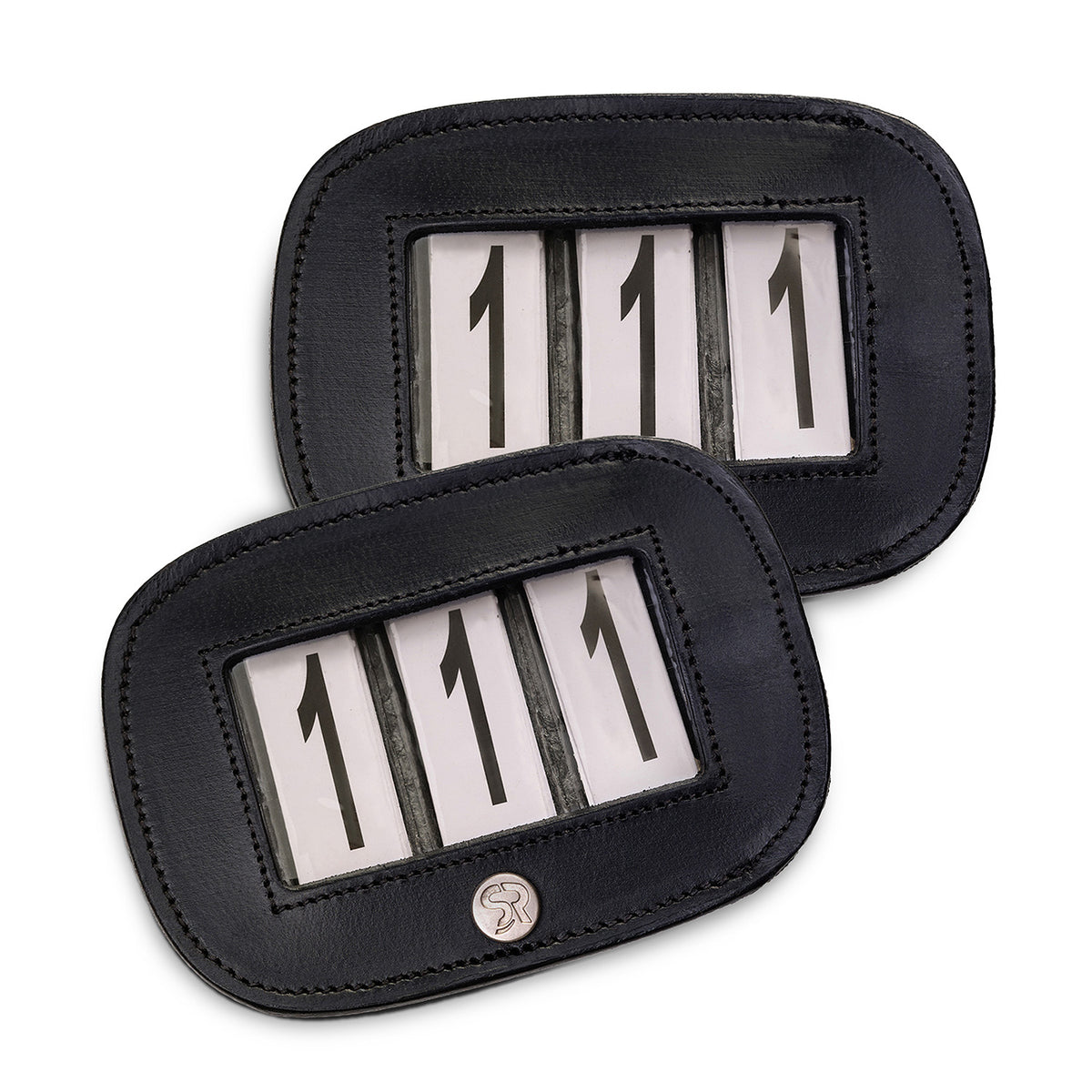


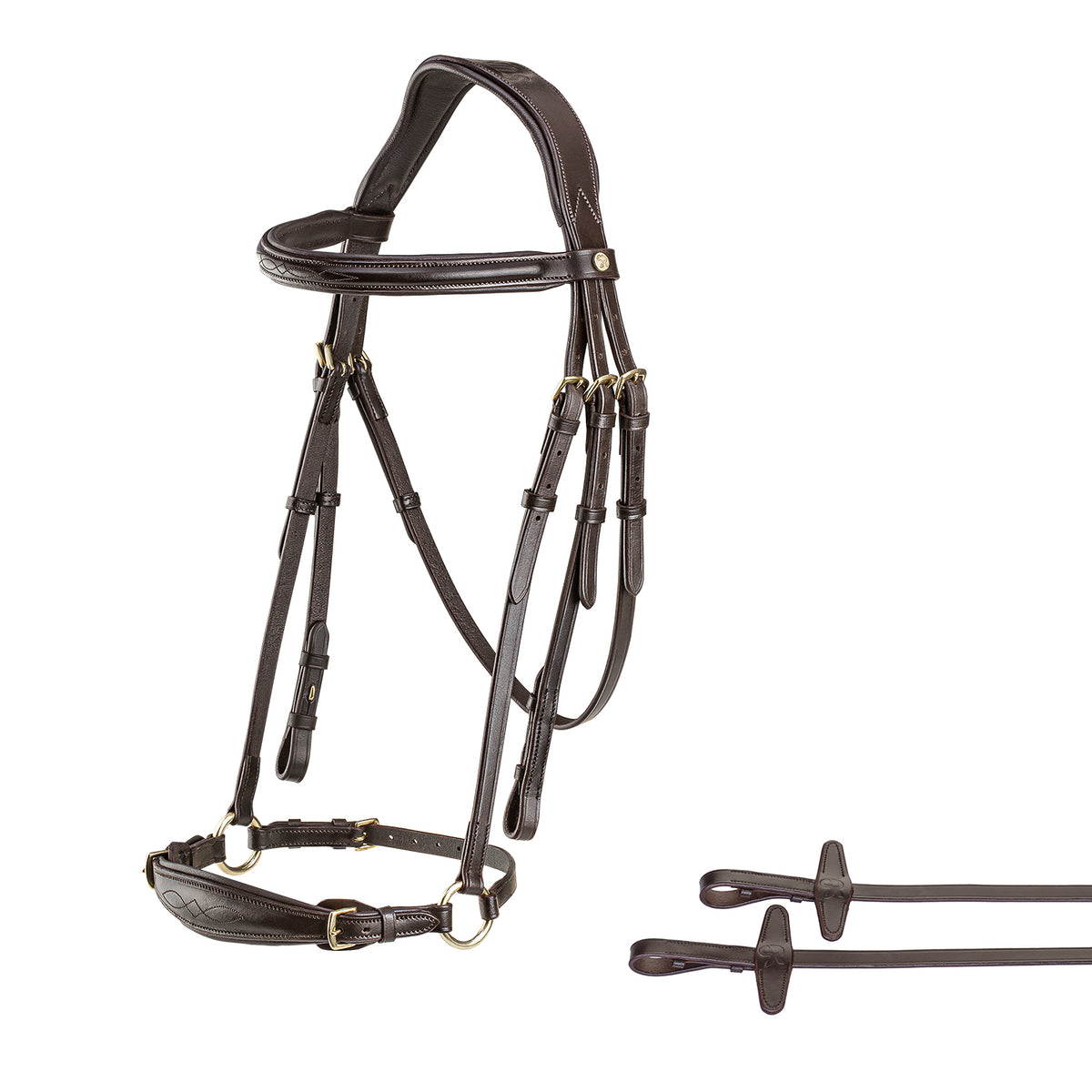


English combined bridle "Hawaii" with reins
What riders say about our bridles
My mare is very sensitive at the poll. She is much more relaxed with the bridle and chews contentedly on the bit.
— Trusted Shops Review
The leather was already wonderfully soft right out of the packaging. The bridle also looks great and fits exactly as I had hoped.
— Customer review of the Swedish noseband (Aspen)
We have tried a few bridles, but we are definitely keeping this one. My horse chews better and seems much more relaxed while riding.
— Customer review for the English combined bridle (York)
Fits my gelding really well and is easy to adjust. It sits steadily even during daily training and doesn't chafe anywhere.
— Customer review for the Mexican bridle (Acapulco)


The right bridle for your horse: Subtle aids without unnecessary pressure
The bridle forms the direct connection between your hand and the horse's mouth. If it does not fit correctly, it can cause uncomfortable pressure on the poll, ears, or nasal bone and make subtle aids more difficult. A well-fitting horse bridle leaves enough room for sensitive areas, sits steadily on the head, and supports precise rein handling. But which bridle suits your horse, and what is important regarding size, noseband, and buckling? We will show you what matters when choosing one.
What should you look for when buying a bridle?
A bridle should not only be visually appealing, but above all fit your horse's head and take particularly sensitive areas into account:
- Correct size: The bridle should neither pinch nor slip. Adjustable straps help to adapt it individually to the horse's head.
- Sufficient space for the ears: A suitably shaped headpiece avoids pulling on the ears and can reduce unpleasant pressure.
- Correct browband: If the browband is too short, it pulls the headpiece forward. It should fit loosely and leave enough room at the sides.
- Correctly buckled noseband: The noseband must not restrict breathing or chewing. Its position and a suitable width are crucial.
- Soft contact surfaces: Comfortable padding in sensitive areas can prevent friction and pressure points and increase wearing comfort.
What a well-designed bridle achieves when riding
The effect of a bridle is not created by applying as much pressure as possible, but rather through the interplay of its individual components. Careful adjustment creates the foundation for a calm connection and clear aids.
More letting go
Less distracting pressure on the poll, ears, and jaw can help your horse work through its body in a more relaxed and supple way.
More harmonious gait pattern
If your horse can move its poll freely, it finds it easier to arch its back and develop its movements more evenly.
More consistent contact
A steady bit position supports a consistent connection between your hand and the horse's mouth.
Finer aids
When the bridle fits securely, rein aids are conveyed more precisely and require less obvious repetition.
Fewer defensive reactions
Appropriate pressure distribution can reduce restlessness such as head tossing, head throwing, or opening of the mouth, provided the bit is the trigger.
Better conditions for vocational training
A horse that is comfortable with its equipment can concentrate more easily, accept aids, and understand new tasks.

Why we choose real leather for our bridles
The material of a bridle rests directly against the horse's head. It must be supple enough to fit comfortably, while remaining dimensionally stable and durable so that the buckles sit securely.
Our leather bridles combine resilient leather with softly padded contact surfaces. Neatly finished edges reduce friction, and sturdy fittings provide security in daily use. With regular care, the leather remains supple and resistant for a long time.
Frequently Asked Questions (FAQ) about Horse Bridles
Which bridle suits my horse?
The right bridle depends on the shape of the head, sensitive areas, and the desired bitting. It is essential that all straps lie correctly and can be adjusted individually.
How do I find the right bridle size?
Use the size of your horse as a guide. Our bridles are available in Pony, Cob (Thoroughbred), and Full (Warmblood) sizes. Additionally, compare the measurements with the size chart. The lengths of the headpiece, browband, and cheek pieces are particularly important.
How do I know if a bridle fits correctly?
The bridle must neither pinch nor slip. The ears, cheekbones, and corners of the mouth should remain free, while the bit should sit steady and at the same height on both sides.
What is the difference between an anatomical and a classic bridle?
Anatomical bridles are shaped to specifically avoid or relieve pressure on sensitive areas. Classic models usually feature a straighter and simpler cut.
Which noseband is suitable for my horse?
That depends on the anatomy, the level of training, and the reaction of your horse. Regardless of the model, the noseband must not restrict breathing, chewing, or swallowing.
How do I properly care for a leather bridle?
Remove sweat and dirt after riding with a slightly damp cloth. Regular, sparing leather care keeps the material supple and protects it from drying out.