


Practical sets
Perfectly matched blankets for any weather condition.


What riders say about our sweat rugs
The material feels very comfortable and the blanket looks really nice. We now use it after every training session.
— Trusted Shops Review
Delivered very quickly and lovingly packaged. Tried it out immediately and my horse was dry again after a short time.
— Trusted Shops Review
Fits really well in the normal size and does not slide backward while walking. It is exactly how I had imagined it.
— Trusted Shops Review


Why a cooler rug is useful after riding
After training, there is often still a lot of moisture in the coat. If the sweat evaporates directly on the skin and hair, heat is drawn from the body. A functional cooler rug absorbs the moisture from the coat side and transports it to the outside, where it can continue to evaporate. This is particularly practical in cool weather, with a thick winter coat, for clipped horses, and during transport.
What should you look for when buying a cooler rug?
Not every cooler fits every type of weather or horse. The key factors are function, material, and fit:
- Moisture wicking: The material should draw sweat away from the coat to the outside, rather than simply trapping it in the rug.
- Suitable material: Fleece is particularly well-suited for cool conditions, while softshell provides additional protection against wind and light moisture from the outside.
- Good fit: The rug should leave enough room at the withers and shoulders, and it should neither pull back nor slip significantly while walking.
- Secure fit: The chest closure, tail cord, and, depending on the model, surcingles reliably keep the rug in position during movement.
- Appropriate use: Coolers are intended for drying phases, breaks, and transport. For continuous rain or unsupervised turnout, you need a suitable turnout rug.
Which sweat rug is right for your horse?
How quickly a horse dries depends on the amount of sweat, coat length, outside temperature, and air movement. Therefore, it is worth choosing the cooler according to actual need.
In cases of thick winter coat or heavy sweating
Long fur can trap a lot of moisture between the hairs. A highly moisture-wicking material helps to continuously transport this wetness to the outside. Check the blanket occasionally and change it if the inside has become noticeably wet.
For clipped horses
After shearing, the coat usually dries faster, but at the same time, a large part of the natural insulation is missing. On cool days, the cooler rug should therefore wick away moisture and protect the still-warm back from direct drafts.
In wind, at tournaments, or during transport
A softshell outer material can be useful here. It provides better protection against wind and light moisture from the outside, while the breathable construction continues to allow moisture transport.
After washing or hosing down
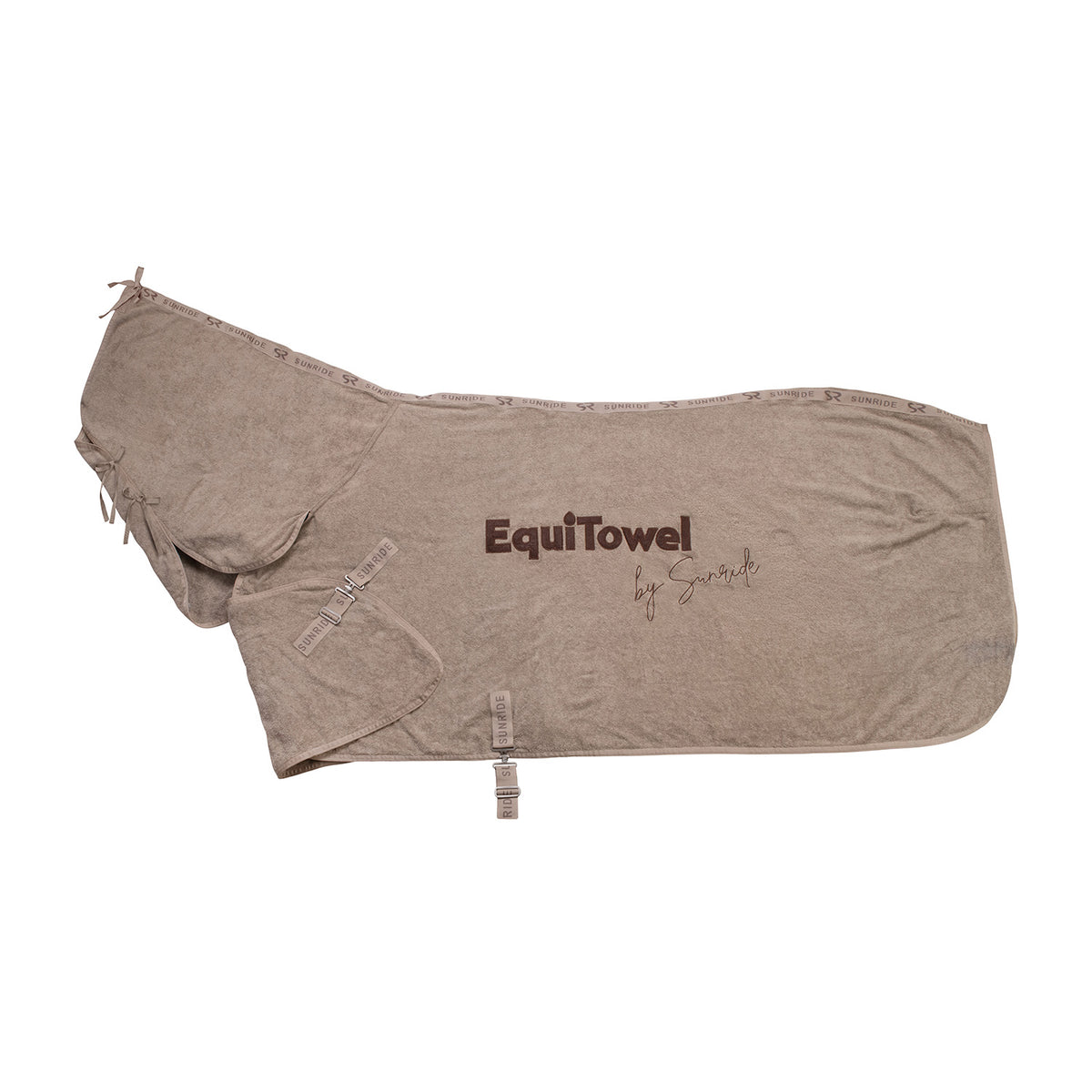
If the coat is very wet, it can be useful to first remove some of the water with a sweat scraper, towel, or our absorbent "EquiTowel" terry blanket. Afterwards, the cooler rug takes over the remaining drying phase.
In cold temperatures
A warmer fleece rug is ideal if your horse is still damp after training and needs protection from cooling down too quickly. It wicks moisture away and keeps the back comfortably warm.
While warming up
A cooler rug can also be useful before training. Placed loosely over the back and loins, it helps to keep the muscles warm in cooler temperatures until your horse is completely warmed up.

Correctly classifying materials and functions
Fleece is soft, lightweight, and can wick moisture away along its fibers. Depending on the material thickness, it provides additional warmth and is particularly suitable after training, in the stall, or during transport.
Softshell with a fleece lining combines the moisture-wicking properties of a soft interior with greater protection against wind and light moisture from the outside. This is practical if your horse is not drying off exclusively in a sheltered stable aisle after training.
Frequently Asked Questions (FAQ) about cooler rugs
When should a sweat rug be used?
A sweat rug is primarily used after training, lunging, or other strenuous activities. It absorbs moisture from the coat and wicks it away to the outside, allowing your horse to dry off in a controlled manner.
How long should a cooler rug stay on the horse?
Until the coat is largely dry and no longer feels damp or clammy under the rug. Afterwards, it should be removed or replaced with a stable or outdoor rug suitable for the housing conditions and temperature stable.
Which sweat rug is the right one for my horse?
This depends primarily on the weather and the intended use. Classic fleece sweat rugs offer moisture transport and pleasant warmth. Models with a softshell exterior provide additional protection against wind and light moisture. Particularly breathable versions with mesh are suitable when excess heat needs to escape quickly.
Can I use a sweat rug after washing my horse?
Yes, however, you should first remove larger amounts of water with a sweat scraper or a particularly absorbent cloth such as our SUNRIDE Equitowel. The cooler rug can then absorb the remaining moisture from the coat and support further drying.
What is the difference between a sweat rug and a regular horse rug?
A sweat rug is specially designed to absorb moisture from the coat and wick it to the outside. In contrast, stable and winter rugs are primarily intended for insulation and warmth. A horse that is still significantly damp should therefore first be dried with a suitable sweat rug.