

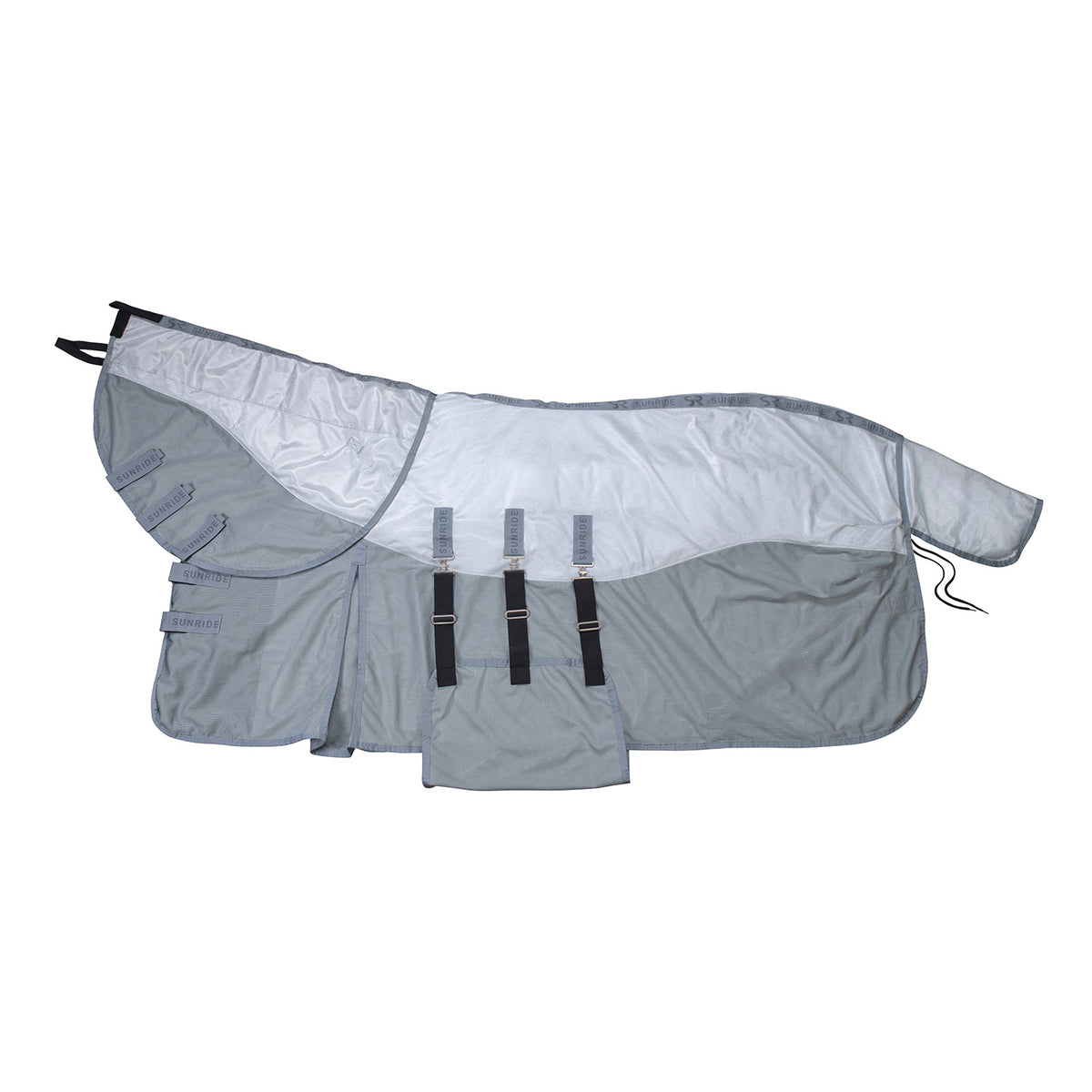


This is what riders say about our fly rugs
Our blankets have to withstand a lot because there is a lot of playing going on in the paddock. This one has held up to everything so far and hasn't had a single tear yet.
— Trusted Shops Review
The belly area is really well covered. That is exactly where my horse was constantly being bitten by insects before.
— Customer review for the fly rug (Ibiza)
After washing, the blanket dried quickly and kept its shape perfectly. That is really practical in the summer.
— Trusted Shops Review


Why fly protection can be useful in summer
Flies, horseflies, and other insects can be a constant nuisance for horses in pastures, paddocks, and stables. Tail swishing, skin twitching, stamping, or frequent head tossing are typical reactions to these bothersome pests. A suitable fly sheet shields large areas of the body and can provide your horse with more peace without the need to cover it with a heavy blanket.
When is a fly rug useful?
How much protection your horse needs depends on the prevalence of insects, its sensitivity, how it is kept, and how it is used. Depending on the situation, a different model may be appropriate.
- When there are many insects: If flies and horseflies are constantly bothering your horse, a fly rug can significantly reduce direct contact with the body, ensuring more peace and quiet.
- In the pasture and paddock: For longer periods outdoors, a lightweight fly rug offers extensive protection while ensuring your horse retains sufficient freedom of movement.
- For sensitive horses: Horses that react particularly strongly to insects or become restless quickly can benefit from a rug that is as well-fitting and as protective as possible.
- In the stable or at a tournament: Insects can also be a nuisance in open stables or unfamiliar surroundings. A lightweight fly rug offers protection without causing your horse to overheat.
- When additional protection is needed: Depending on the model, the neck, belly, or chest areas can be covered more extensively. Rain fly rugs combine insect protection with additional light rain protection, so your horse remains suitably protected even in changeable summer weather.
The benefits of high-quality fly rugs
A good fly rug should offer as much protection as possible while remaining lightweight, breathable, and allowing freedom of movement. Therefore, the interplay between coverage, fit, and comfort is crucial.
Less direct insect contact
The material shields large areas of the body and makes it difficult for flies, horseflies, and other insects to come into direct contact with the coat.
More peace in everyday summer life
Fewer disruptive contacts can help your horse stand and graze more relaxedly in the pasture, paddock, or stable.
Light protection in warm conditions
Fly rugs are designed for warm conditions and provide protection without the heavy feel of a lined rug.
Good air circulation
Air-permeable structures support air exchange and help prevent unnecessary heat buildup under the ceiling.
Active seating
A proper fit allows sufficient room at the shoulders, back, and hindquarters so that your horse can move as freely as possible.
Different protection zones
Depending on the model, the protection can be extended by additional neck, belly, or chest coverage as well as light rain protection and adapted to different needs.

Why fit is particularly important for fly sheets
A fly sheet is often worn for many hours and must therefore offer both protection and freedom of movement simultaneously. It should provide sufficient space at the chest and shoulder without slipping excessively, and should remain securely on the horse even when grazing or rolling. Areas that are too tight can promote rubbing, while a blanket that is too large slips more easily. Therefore, the right size for fly sheets is just as important as the desired area of protection.
Frequently Asked Questions (FAQ) about fly rugs
When does my horse need a fly sheet?
A fly sheet can be useful when there are many flies, horseflies, or other insects around and your horse frequently becomes restless as a result. Sensitive horses often benefit from additional protection as well.
Will my horse get too hot under a fly sheet in the summer?
A suitable fly sheet is designed to be lightweight and breathable. Nevertheless, you should check on your horse regularly during extreme heat and ensure that the rug is appropriate for the temperature and its intended use.
Which areas should a fly sheet cover?
That depends on your horse's needs. In addition to the torso, there are models with extra neck, belly, or chest protection. The more sensitive your horse is to insects in certain areas, the more important greater coverage may be.
How should a fly rug fit correctly?
It should leave enough room at the chest and shoulder, provide good coverage for the body, and not slip significantly during movement. At the same time, it must not be so loose that it shifts easily when rolling or running.
Can my horse go out to pasture with a fly rug?
Yes, provided the blanket in question is intended for turnout and fits securely. Regularly check the fastenings, fit, and material for damage.
How do I properly care for a fly rug?
Regularly remove hair, dust, and dirt and follow the care label for the specific model. Fasteners should be closed before washing to protect both the material and the washing machine.