



What riders say about our stable rugs
For us, the 150g under-rug is perfect for the transitional season. When it gets really cold, I simply swap it for the 300g version.
— Customer review for the 150g stable rug
I went straight for the set and I'm glad I did. This way I can switch depending on the temperature and also saved some money in the process.
— Trusted Shops Review
Under the winter blanket, it doesn't bunch up or pull across the chest. My horse can move around completely normally in it.
— Customer review of the fleece underblanket


More warmth, without having to change the top blanket directly
Under-rugs are worn under a suitable outer rug to increase their insulating performance. This allows you to flexibly adjust the level of warmth without needing a completely different rug for every weather condition. Different fill weights allow for finer adjustments based on your horse's clipping, coat, age, stabling, and individual warmth requirements.
When is an underlayment useful?
An under-rug is particularly practical if the existing outer rug generally fits, but your horse occasionally needs more warmth. Which thickness is appropriate always depends on the individual horse and the current conditions.
- When it gets significantly colder: If temperatures drop, an additional under-rug can provide extra insulation to the existing outer rug.
- For clipped horses: After clipping, part of the natural coat insulation is missing. An under-rug allows you to specifically increase thermal protection.
- During the transition period: In times of rapidly changing temperatures, an existing rug can be more flexibly adjusted with an additional layer.
- For older or cold-sensitive horses: Horses with a higher need for warmth can benefit from an additional insulating layer without having to change the entire rug combination.
- When different fill weights are to be combined: Depending on the system, lighter and heavier under-rugs can be used individually or combined (Hook&Hold) to further customize thermal protection.
The advantages of high-quality suspended ceilings
Under-rugs make blanketing more versatile: Instead of just switching between individual winter rugs, you can adjust the thermal protection more precisely by using additional layers. Key factors here are a secure fit, minimal extra bulk, and the right combination with the outer rug.
Flexibly supplement heat
The existing top rug can be extended with additional insulation if your horse needs more warmth.
Additional air layer – better insulation
Air is trapped between the under-rug and the top rug. This stagnant air acts as insulation and slows the release of heat from the horse's body to the cooler environment.
Different fill levels
Lighter and stronger variants allow for finer tuning according to the season, shearing, and individual needs.
Multiple layers can be combined
With our Hook&Hold system, liners can be combined with one another, thereby expanding the possible levels of warmth.
Fewer blanket changes
Instead of replacing the entire top cover with every change in temperature, it is often possible to simply adjust the insulating layer.
Versatile through autumn and winter
The layering principle is particularly suitable for changing temperatures and different weather conditions.
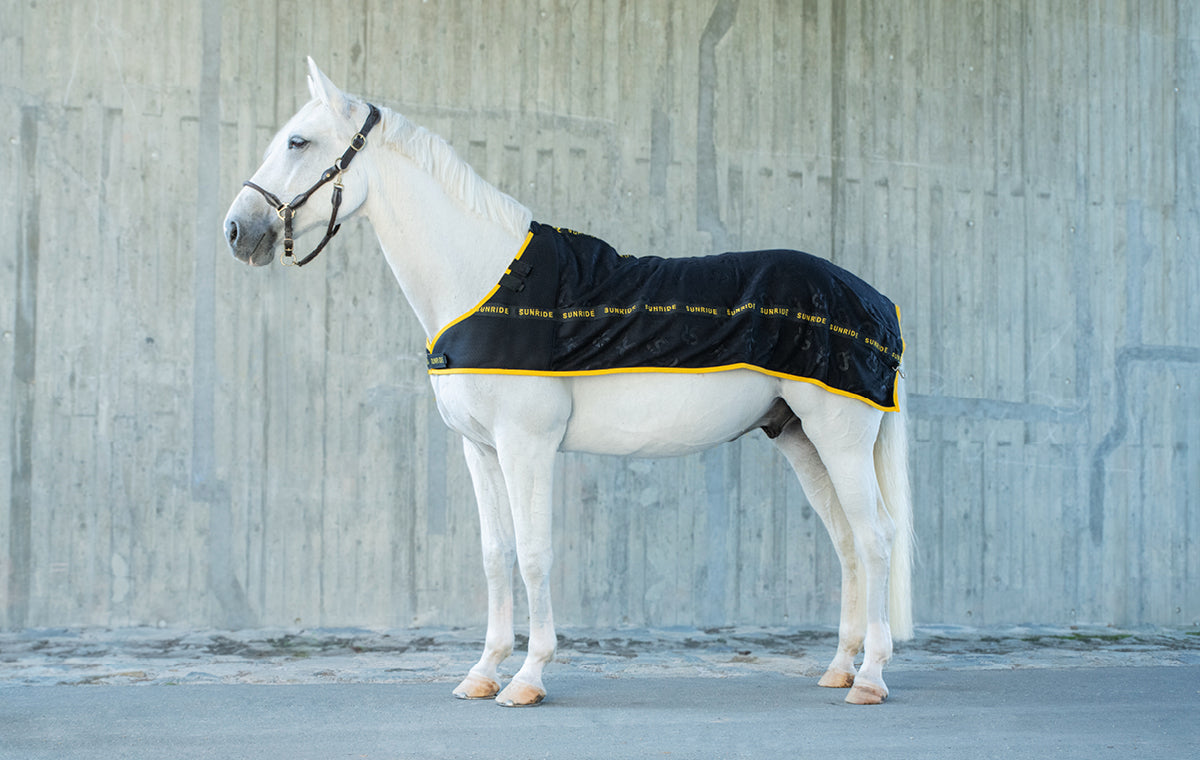
Why multiple layers provide particularly flexible insulation
Warmth is retained not only by the filling itself but also by still air trapped within and between insulating layers. Several properly fitting blankets can therefore provide greater insulation together than a single thick layer. The great advantage lies in the flexibility: you can add or remove individual layers, thereby adjusting the thermal protection to changing conditions. Too many or poorly fitting layers, however, are not practical, as additional volume can impair the fit and freedom of movement.
Frequently Asked Questions (FAQ) about suspended ceilings
What is a horse rug liner?
An underblanket is an additional insulating blanket worn underneath a suitable stable, turnout, or winter rug. It increases thermal protection without needing to serve as a weatherproof outer layer itself.
What is the difference between a 150g and a 300g under-rug?
A 300g under-rug generally provides more insulation than a 150g under-rug. However, which version is suitable depends not only on the temperature, but also on the coat, clipping, age, housing, and individual sensitivity to cold.
Can I combine two underlays with each other?
Yes, our Hook&Hold system allows up to two bottom duvets to be combined with one top duvet, ensuring all layers are securely fixed without pressure or shifting. This makes it possible to flexibly combine different levels of warmth and reduce them again if necessary.
Can I use an underblanket without a top blanket?
That depends on the model. Classic under-rugs are intended for use in combination with a top rug and do not provide sufficient protection against rain or wet outdoor conditions on their own. Models with additional usage options may differ.
What size should my liner rug be?
As a rule, you should use your horse's standard rug size as a guide. It is important that the liner lies flat beneath the outer rug, does not pull backwards, and does not restrict the shoulders or withers.
Can my horse wear a liner in the paddock or out in the field?
Yes, if a suitable weatherproof top rug is worn over it and both rugs are securely combined. A liner alone should not be used as the outer layer in wet conditions.