
| Term | Wild carrot |
| Category | Herbs |
| Definition | The wild carrot is the original wild form of the cultivated carrot. It grows in meadows and along roadsides and is generally considered unproblematic for horses. |
| Effect & Benefits | The plant contains essential oils, minerals, and secondary plant compounds, among other things. It is traditionally associated with mild support for digestion and metabolism. However, specific medical effects in horses have only been studied to a limited extent. |
| Application | Wild carrot is usually not fed specifically as a single herb but is consumed fresh from species-rich pastures or dried in hay. Boiling is not necessary. |
| Fresh or dried? | Wild carrot can be consumed fresh or dried. Fresh plants should only be fed if they have been safely identified and come from uncontaminated areas. |
| Important to know | Safe identification is essential, as wild carrot can be confused with poisonous umbellifers such as poison hemlock. Therefore, plants that have not been securely identified should never be intentionally fed. |
| Related terms | Umbellifers · Hemlock · Meadow herbs · Digestion · Metabolism |
You might also be interested in this
Be inspired and find practical tips on the care, equipment, and health of your horse.

Wild carrot is considered safe for horses, but must be reliably distinguished from poisonous umbellifers like hemlock.
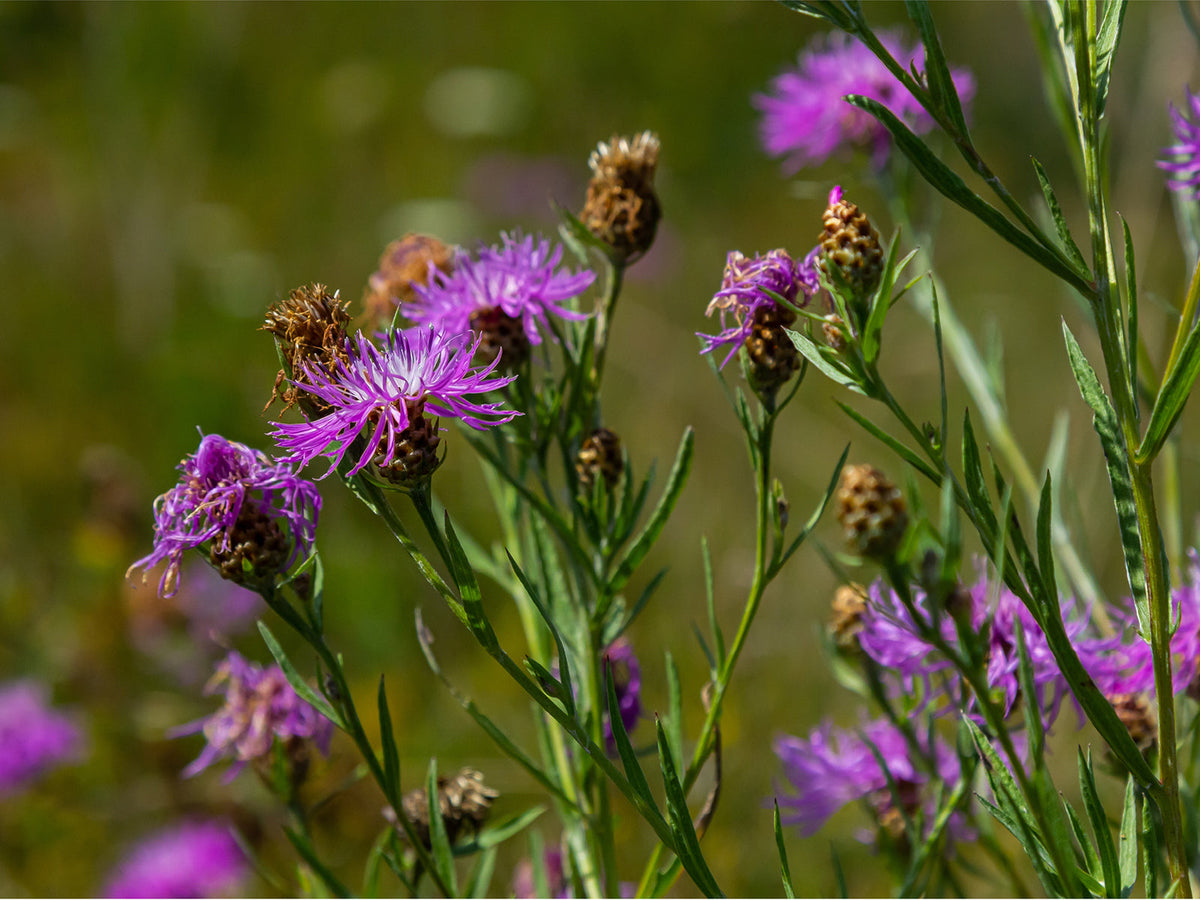
Brownray knapweed (Centaurea jacea)
Brown knapweed is considered unproblematic for horses in normal amounts and can be a component of species-rich meadows and hay.

White clover (Trifolium repens)
White clover can be part of a horse pasture, but due to its high nutrient content, it should not dominate the vegetation.
Share:
Brownray knapweed (Centaurea jacea)