
| Term | White clover |
| Category | Herbs |
| Definition | White clover is a protein-rich legume commonly found in horse pastures. In a balanced plant population, horses can generally graze it without issue. |
| Effects & Benefits | White clover provides high-quality protein and minerals and can complement a biodiverse pasture. Due to its comparatively high nutrient content, however, it should only make up a portion of the total plant population. |
| Application | White clover is typically not fed as a targeted individual herb, but is consumed fresh from the pasture or dried as part of hay. Additional supplementation is usually not required. |
| Fresh or dried? | White clover can be consumed both fresh and dried. Problems are mainly associated with pastures very high in clover or spoiled/fungus-infested plant populations. |
| Important to know | White clover is not considered toxic in principle. However, in cases of heavy clover growth, the ration can become very high in protein. Furthermore, certain fungal loads on clover can cause increased salivation. Therefore, a diverse and healthy pasture sward should be maintained. |
| Related terms | Clover · Legumes · Protein · Pasture · Red clover |
You might also be interested in this
Be inspired and find practical tips on the care, equipment, and health of your horse.

Wild carrot is considered safe for horses, but must be reliably distinguished from poisonous umbellifers like hemlock.
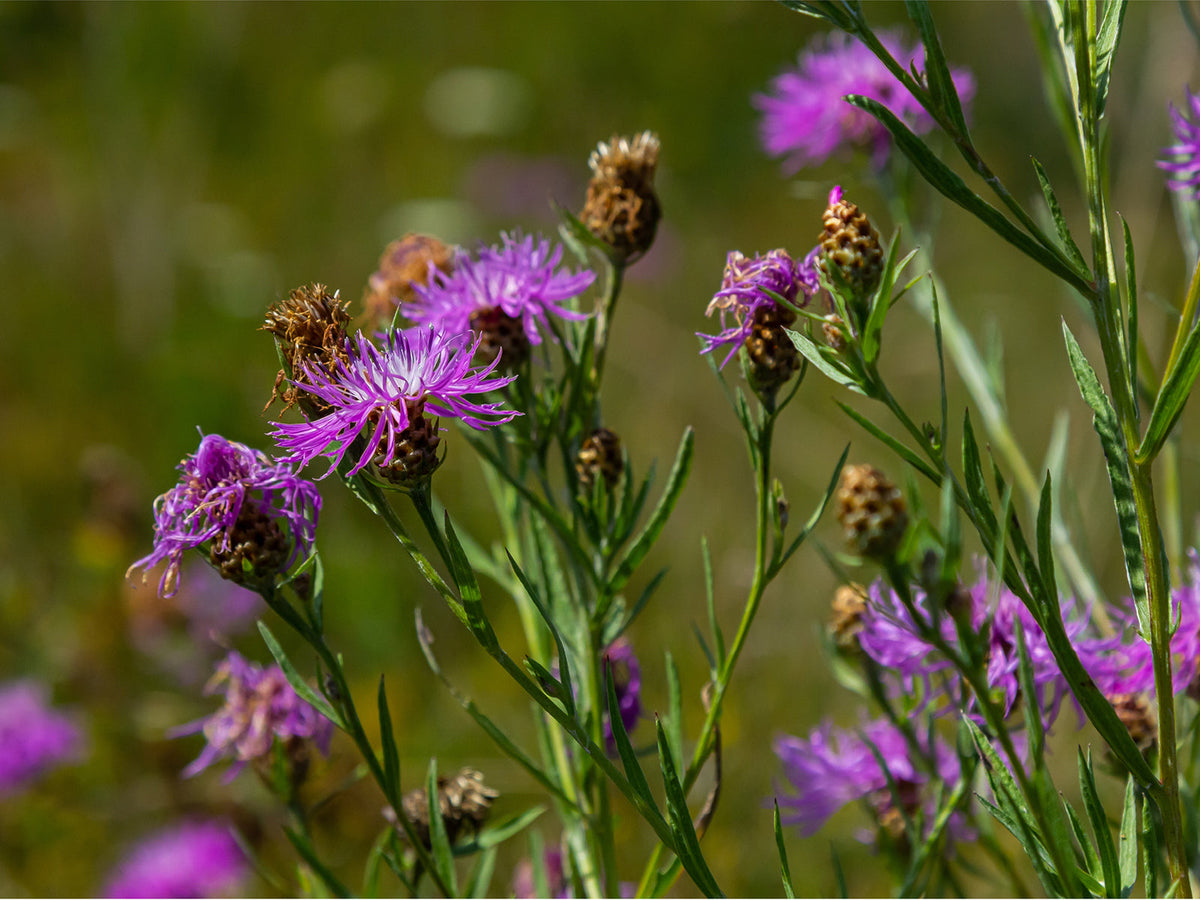
Brownray knapweed (Centaurea jacea)
Brown knapweed is considered unproblematic for horses in normal amounts and can be a component of species-rich meadows and hay.

White clover (Trifolium repens)
White clover can be part of a horse pasture, but due to its high nutrient content, it should not dominate the vegetation.
Share:
Chicory (Cichorium intybus)
Brownray knapweed (Centaurea jacea)