
| Term | Catsear |
| Category | Herbs |
| Definition | Catsear is a yellow-flowering meadow plant that can resemble a dandelion. In horses, it is associated with a neurological movement disorder known as stringhalt. |
| Effects & Risks | The exact cause of the toxic effect has not yet been fully clarified. However, the ingestion of catsear has been repeatedly linked to pasture-associated stringhalt. In this condition, one or both hind legs are suddenly lifted unusually high while walking. |
| Application | Catsear has no useful application in horse feeding. In the case of larger populations on horse pastures, the plant should be controlled and ingestion prevented as much as possible. |
| Fresh or dried? | Ingestion on the pasture, in particular, is linked to catsear-related stringhalt. Since the responsible toxin is not yet clearly known, the plant should not be fed intentionally, even in dried form. |
| Good to know | Typical for stringhalt is a jerky, excessive lifting of the hind legs. This can become especially apparent when backing up or turning sharply. Many horses improve after being removed from the affected pasture, though recovery can take a considerable amount of time. |
| Related terms | Poisonous plants · Stringhalt · Pasture management · Dandelion · Nervous system |
You might also be interested in this
Be inspired and find practical tips on the care, equipment, and health of your horse.

Wild carrot is considered safe for horses, but must be reliably distinguished from poisonous umbellifers like hemlock.
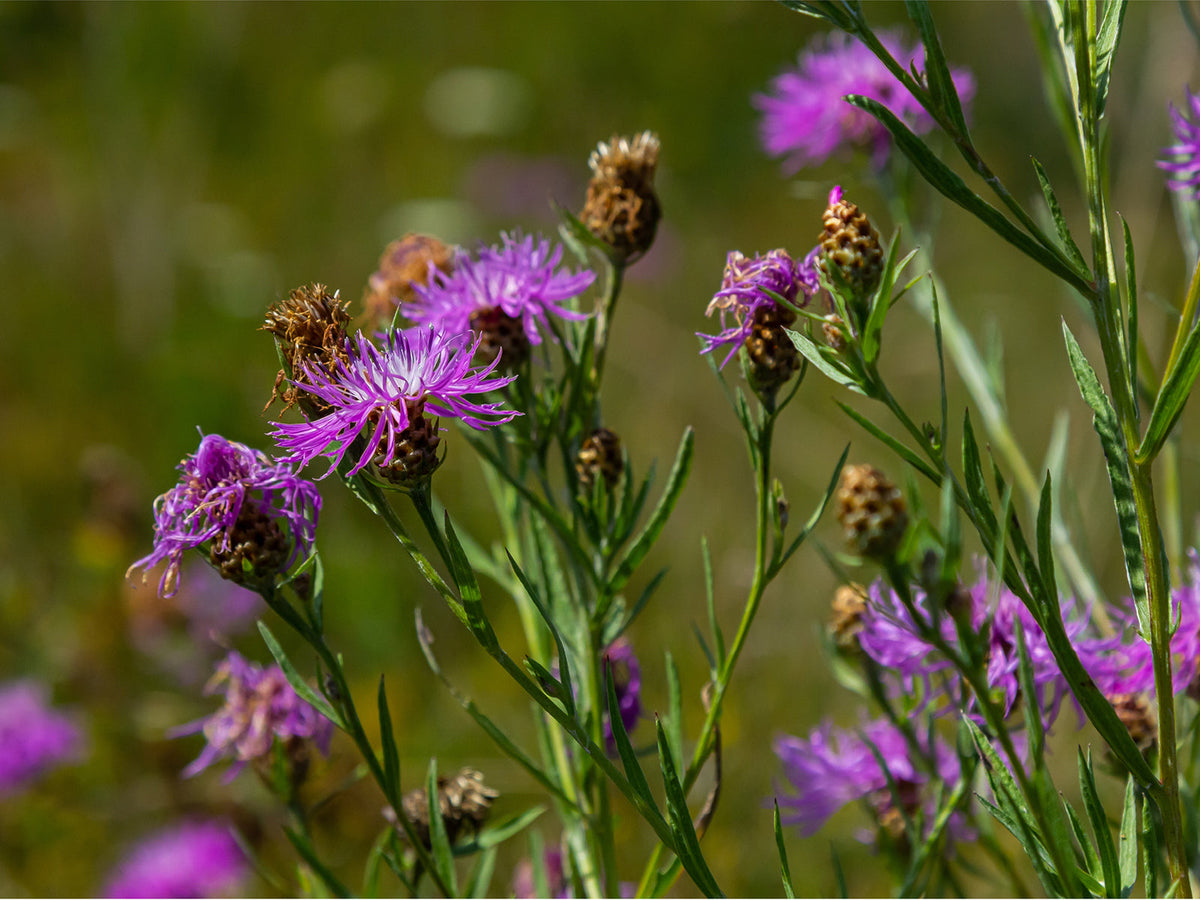
Brownray knapweed (Centaurea jacea)
Brown knapweed is considered unproblematic for horses in normal amounts and can be a component of species-rich meadows and hay.

White clover (Trifolium repens)
White clover can be part of a horse pasture, but due to its high nutrient content, it should not dominate the vegetation.
Share:
Monkshood (Aconitum napellus)
Foxglove (Digitalis purpurea)