
| Term | Bird's-foot trefoil |
| Category | Herbs |
| Definition | Bird's-foot trefoil is a yellow-flowering legume found in meadows and pastures. In small quantities, it can be a component of species-rich horse pastures. |
| Effects & Benefits | Bird's-foot trefoil provides protein and phytochemicals. Some varieties and stands also contain condensed tannins. In normal quantities, bird's-foot trefoil is not considered a typical toxic plant for horses. |
| Application | Bird's-foot trefoil is not normally fed as a single herb but is rather consumed via pasture or hay. Supplementary feeding is generally not necessary. |
| Fresh or dried? | Bird's-foot trefoil can occur fresh in the pasture or dried in hay. A varied diet without an excessive proportion of individual plant species is crucial. |
| Important to know | Bird's-foot trefoil can form cyanogenic compounds. This means that under certain conditions, hydrogen cyanide can be released. With normal pasture occurrence, the risk is usually low, but large or one-sided intake should be avoided. |
| Related terms | Pasture herbs · Legumes · Tannins · Hydrogen cyanide · Clover |
You might also be interested in this
Be inspired and find practical tips on the care, equipment, and health of your horse.

Wild carrot is considered safe for horses, but must be reliably distinguished from poisonous umbellifers like hemlock.
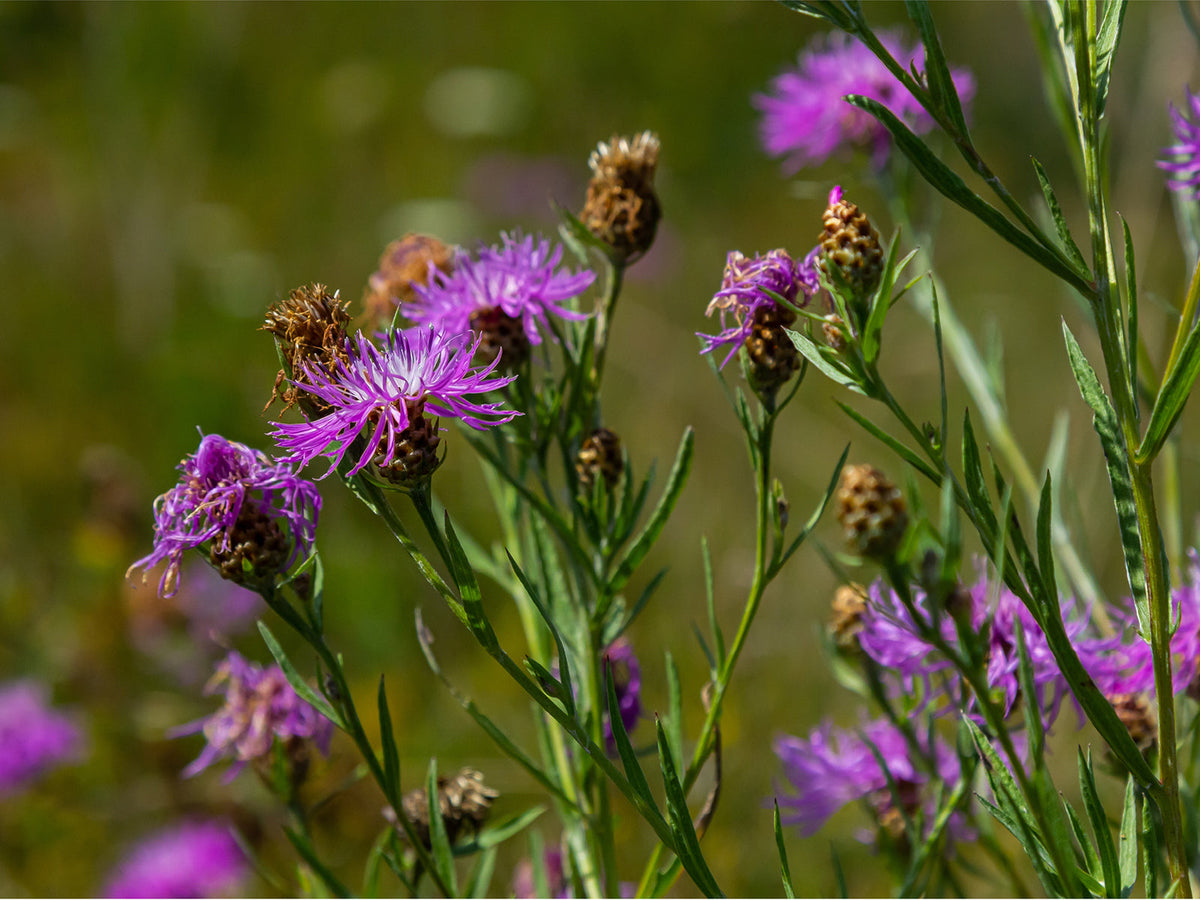
Brownray knapweed (Centaurea jacea)
Brown knapweed is considered unproblematic for horses in normal amounts and can be a component of species-rich meadows and hay.

White clover (Trifolium repens)
White clover can be part of a horse pasture, but due to its high nutrient content, it should not dominate the vegetation.
Share:
Autumn crocus (Colchicum autumnale)
Common ragwort (Jacobaea vulgaris)