
| Term | Horsetail |
| Category | Herbs |
| Definition | Horsetail, also known as field horsetail or scouring rush, is a plant rich in silicic acid. It is traditionally associated with supporting the skin, coat, connective tissue, and urinary tract. |
| Effects & Benefits | Horsetail contains, among other things, silicic acid and silicates. These plant components are traditionally associated with supporting the skin, coat, and connective tissue. Furthermore, field horsetail has a mild diuretic effect. However, the scientific data regarding its targeted use in horses is limited. |
| Application | Horsetail should not be fed to horses independently as a loose herb or mixed into feed on a long-term basis. If it is a component of a feed supplement, the specified feeding recommendation should be strictly followed. |
| Fresh or dried? | Both fresh and dried horsetail can be problematic for horses. The thiaminase it contains is not reliably neutralized by drying. Therefore, hay contaminated with horsetail should not be fed on a long-term basis. |
| Important to know | Horsetail contains thiaminase. This enzyme can break down vitamin B1. If larger quantities are ingested over a long period, it can lead to a vitamin B1 deficiency in horses. Possible consequences include weight loss, muscle weakness, coordination problems, tremors, and in severe cases, seizures. Horsetail should therefore not be used uncontrollably as a forage plant. |
| Related terms | Silicic acid · Vitamin B1 · Skin & coat · Urinary tract · Poisonous plants |
You might also be interested in this
Be inspired and find practical tips on the care, equipment, and health of your horse.

Wild carrot is considered safe for horses, but must be reliably distinguished from poisonous umbellifers like hemlock.
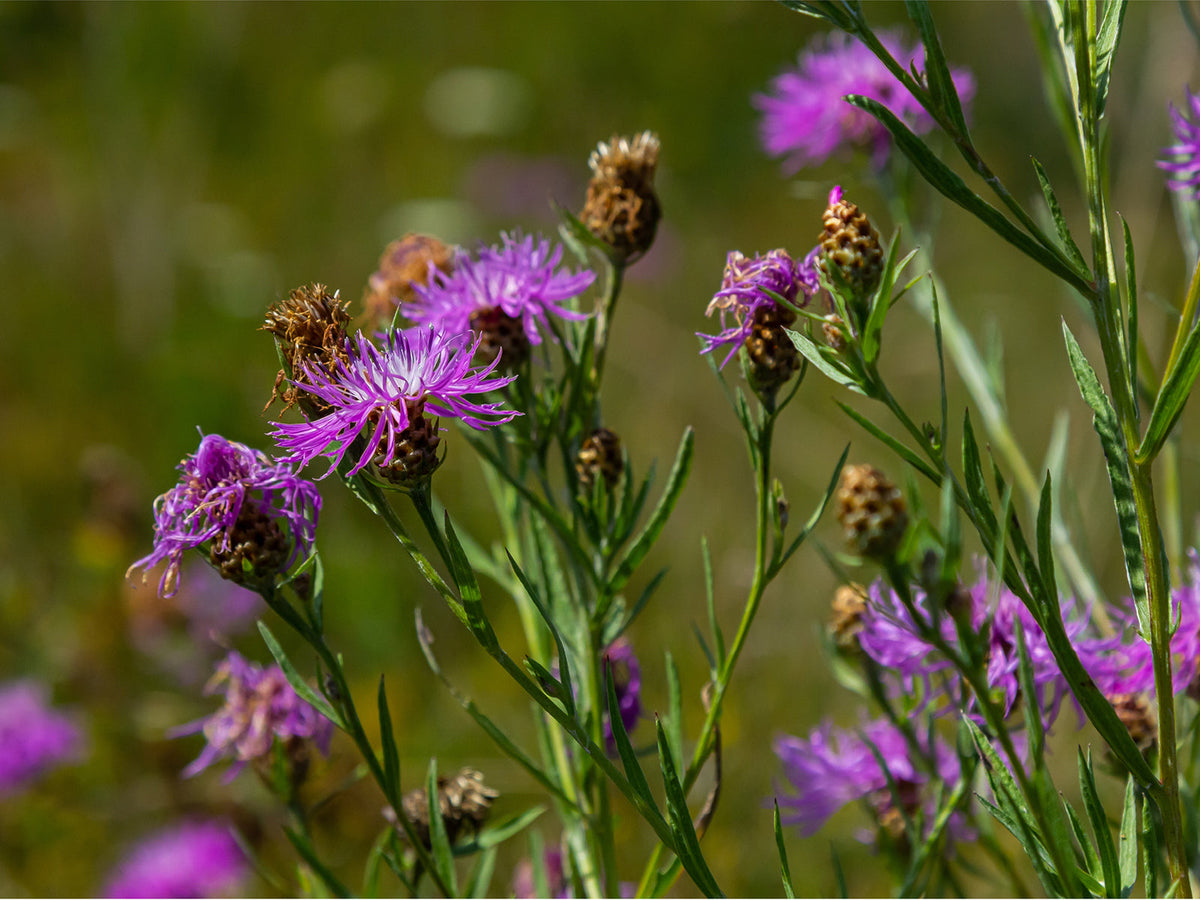
Brownray knapweed (Centaurea jacea)
Brown knapweed is considered unproblematic for horses in normal amounts and can be a component of species-rich meadows and hay.

White clover (Trifolium repens)
White clover can be part of a horse pasture, but due to its high nutrient content, it should not dominate the vegetation.
Share:
Devil's Claw (Harpagophytum procumbens)
Echinacea (Echinacea purpurea)